

Description
The Culinary Skills program is designed to provide students with skills and knowledge required for a career in the culinary industry. Students complete two terms of lab and theory class instruction followed by a paid work-integrated learning experience in the final academic term.
Throughout the program, students develop strong foundational culinary skills and gain confidence using a wide range of cooking techniques in a professional kitchen environment. They also develop the efficiency, organization, and adaptability needed to work effectively in fast paced settings, supporting consistency in their work and upholding essential food safety standards.
In addition, students earn key industry certifications, including Food Handler Level 1, WHMIS, and Smart Choices, providing a solid foundation for entry into professional kitchen environments.
DOCUMENT SUBMISSION
Upload Through Your Future Student Account
If you do not have a Future Student Account or require assistance, please contact our Student Service Centre at 204-632-2327.
Internationally Educated Applicants - visit www.rrc.ca/credentials for credential assessment information.
However, if you apply within 6 weeks of the program start date, admission requirements are due within 5 days of applying.
Regular Admission Requirements
Mature Student Admission Requirements
If you are 19 years of age or older and have been out of high school for a minimum of one year at time of application, and you do not meet the regular admission requirements, you may apply under the Mature Student admission requirements.
| English Language Assessment | Minimum Scores for Certificates, Diplomas and Advanced Diplomas, and Post Graduate Certificates, Post-graduate Diplomas | Minimum Scores for Bachelor Degrees and Creative Communication | International Pathway to Nursing Program |
|---|---|---|---|
| CAEL Online or In-Person | Overall band score of 60 | Overall band score of 70 and Writing of 60 | Overall band score of 60 |
| IELTS Academic Level | Overall 6.0 and No band below 5.5 | Overall 6.5 and No band below 6.0 | Overall 6.0 and No band below 6.0 |
| Password Skills | Overall 6.0 and No band below 5.5 | Overall 6.5 and No band below 6.0 | Overall 6.0 and No band below 5.5 |
| Password Skills Plus | Overall 6.0 and No band below 5.5 | Overall 6.5 and No band below 6.0 | Overall 6.0 and No band below 5.5 |
| LINC Certificate | 7 | 8 | 7 |
| Duolingo Language Test | 115 and above+ with a min. of 95 in each section | 125 and above with a min. of 100 in each section | 115 and above+ with a min. of 95 in each section |
| New English for Academic and Professional Purposes | Successful completion of the program 5 (min 70%) | Successful completion of the program 5 (min 70%) | Successful completion of the program 5 (min 70%) |
| PTE | 54 overall Min 50 in each skill |
60 overall Min 55 in each skill band |
54 overall Min 50 in each skill |
| TOEFL iBT/iBT Home Edition | For tests taken before January 20, 2026 : 78 (no less than 17 per component) For tests taken on January 21, 2026 onwards: 4.0 overall (no less than 3.5 per component) |
For tests taken before January 20, 2026: 86 (no less than 20 per component) For tests taken on January 21, 2026 onwards: 4.5 overall (no less than 4.0 per component) |
For tests taken before January 20, 2026 : 78 (no less than 17 per component) For tests taken on January 21, 2026 onwards: 4.0 overall (no less than 3.5 per component) |
| Academic English Program for University and College Entrance Program (AEPUCE) | Successful Completion | Successful Completion | Successful Completion |
| CELBAN | N/A | N/A | N/A |
Students may apply for financial assistance through the Manitoba Student Aid program. For general information on applying please call 204-945-6321 or 1-800-204-1685, or visit their website at www.manitobastudentaid.ca, which also includes an online application. For detailed information, please visit one of the RRC Polytech Student Service Centres or call 204-632-2327. Applicants requiring financial assistance should complete their student loan applications well in advance of the class start date.
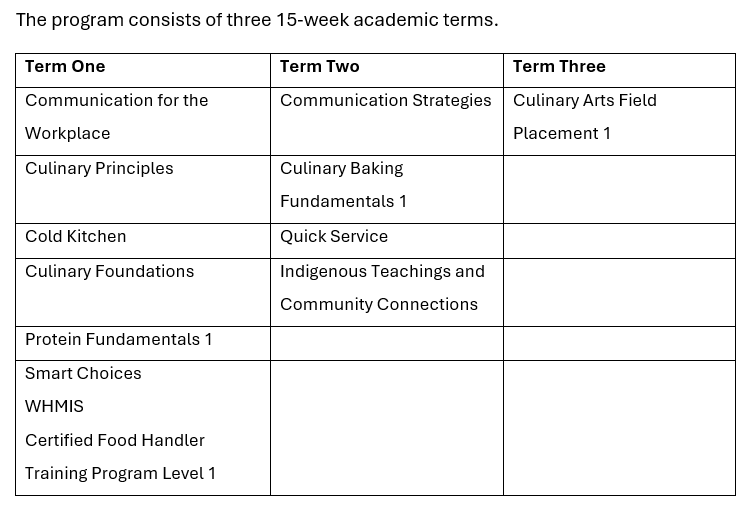
Everyone communicates, but are they doing it well? Communicative competence takes practice and self-awareness. In this foundational course, students will learn through discovery and project-based activities to practice approaching situations critically and collaboratively. By developing their communication skills, students will improve their interpersonal ability, intercultural competence, and digital fluency to prepare for success in the workplace and beyond. The strategies students will gain in this course will be useful throughout their program and in their chosen industry.
This foundational course focuses on essential communication skills for entering and advancing in industry. Students will develop skills for effective resumes, cover letters, and job interviews that are tailored to the specific needs of prospective employers. Additionally, students will enhance their interpersonal skills and digital fluency while applying speaking, writing, and collaboration techniques crucial for job searching, adapting to new roles, and achieving long-term career goals. Students will also develop strategies for continuous learning to remain competitive in an ever-changing job market.
Ready to be a chef? This foundational course provides students with a first look at a commercial kitchen with an introduction to proper knife skills. Students will learn fundamental organization skills essential for the profession, how to care for hand tools, and operate kitchen equipment. They will also learn how to read a recipe, and convert yields, weights, and measurements. Students will set their stations, learn important mise en place techniques, and examine food history. Their culinary journey starts by earning multiple industry-recognized certifications, setting a solid foundation for their career.
Get your palate ready! Let’s start identifying flavour profiles while preparing dressings, salads, and sandwiches. Students will apply basic knife skills through fruit and vegetable preparation. Salads are more than just lettuce! Delicious food offerings with many textures, colours, and flavours will be created. Students will explore various sandwich concepts such as deli sandwiches, tea sandwiches, and simple canapés. They will discover various types of domestic and imported cheese. The art of cold food presentation will be introduced through buffet platter creation.
A well-made stock is the superhero of the kitchen! This introductory course provides the building blocks of hot food preparation. Students begin by preparing, handling, and storing stocks. They move on to create soups including broth, thickened, and specialty. From there, they meet the mother sauces and learn classical techniques to carry them throughout their culinary career. Learn the difference between a rutabaga and a turnip! Students will discover how to identify, differentiate, and prepare vegetables, starches, grains and legumes. Students will ignite their creativity and design their first hot dishes.
Delve into the exciting world of basic meat fabrication and cookery. Students will use food safe practices to properly handle and store meat to ensure customer safety while cooking. They will discover how to identify the structure of common proteins while working with chicken, pork, beef, fish, seafood, and more. Students will acquire essential cooking techniques such as sautéing, searing, roasting, braising, and pan-frying. This course wraps up with students designing their own protein-based recipe to share with their classmates.
Dust off your aprons and enter the best smelling lab on campus! This baking fundamentals course, developed for culinary arts, teaches students to create essential sweet and savoury baked goods. Students will learn restaurant style baking through preparations including basic breads, pizza dough, and hot hors d’oeuvres. They will create sweet delights such as pies, cookies, custards, and cakes. Designing enticing dessert presentations will indulge their creative side. The invaluable baking skills gained in this course will help students create baked goods used throughout many professional kitchens.
Get ready to walk with a purpose! Students will immerse themselves in our student run quick service restaurant. This first look at a busy commercial kitchen will reinforce skills learned in previous courses and prepare them for their first Work Integrated Learning term. Students will prepare and execute simple brunch style menu items including eggs, hash browns, pancakes, bacon, and sausage. Café style baked goods including scones, cinnamon buns, and muffins will be produced. Students will launch their customer service skills while taking customer orders and learning to use an electronic bill system. They will learn to create positive customer interactions while serving finished plates.
Students will explore Indigenous traditions, teachings, and cuisine by creating a deeper understanding and connection with community. Their journey begins by studying the history of Manitoba’s Indigenous peoples’ practices, protocols, and stewardship of the land. Embracing the concept of Two-Eyed Seeing students will engage in experiential, holistic, and relational learning opportunities. Through the examination of plant identification, land-based practices, and traditional cooking methods, students will prepare modern interpretations of Indigenous recipes. They will also create meaningful connections by engaging with Indigenous food producers, chefs, and community.
Jump into the fire! This field placement integrates classroom theory and lab training with on-the-job experience to kick off students’ culinary careers. While spending a minimum of 250 hours during this term of paid employment in the culinary industry, students are provided with the opportunity to practice and apply the skills gained throughout the first year of the Culinary Arts program. Working as part of a team in a professional kitchen guided by industry chefs, students will reinforce fundamental culinary skills to help guide their career goals.
Smart Choices focuses on current laws, safety requirements and responsible strategies when serving or selling liquor. Smart Choices also includes problem gambling awareness information. Responsible service training has been a requirement for restaurants, lounges and other liquor services licensees for over two decades, it is a new requirement for retailers, including beer vendors, liquor vendors, specialty wine stores, Liquor Marts and duty-free stores.
Online learning is a critical component of course delivery in all Red River College Polytechnic programs. To ensure each student has the tools they need to achieve their academic goals, all Red River College Polytechnic students require, at minimum:
Recommended minimum speed: 10 mbps for download, 3 mbps for upload
Slower internet connection speeds may result in audio and video issues. Please keep in mind that if others in your home are using the same internet connection at the same time as you are, you may also experience audio and video issues.
Please refer to Computer Requirements for Students: RRC Polytech for further information on Computer Requirements for Students.
Recognition of Prior Learning (RPL) is a process which documents and compares an individual's prior learning gained from prior education, work and life experiences and personal study to the learning outcomes in College courses/programs. For more information, please visit www.rrc.ca/rpl.